
If your doctor has prescribed infusion therapy, you’re likely wondering whether your insurance will cover it. Here’s the reassuring news: whether you have commercial insurance or Medicare, coverage exists for treatments prescribed to manage chronic and immunological conditions. What often confuses patients isn’t the coverage itself, but rather understanding the approval requirements and knowing how to navigate the system efficiently. Never fear: AmeriPharma is here to help.
In this guide, you’ll learn:
- What commercial insurance plans cover for infusion therapy
- How Medicare handles infusion therapy coverage and costs
- What “medically necessary” means, and why documentation matters
- How AmeriPharma’s free insurance verification removes the burden from you
Insurance Coverage for Infusion Therapy at a Glance
| Coverage Type | What’s Covered | Typical Patient Responsibility | Key Requirements |
| Commercial Insurance | IVIG, biologics, administration, nursing services, supplies | Copays, coinsurance, deductibles (varies by plan) | Prescription with diagnosis code; prior authorization often required |
| Medicare Part B | Outpatient infusion services, certain IV/infused drugs | 20% coinsurance after $257 deductible (2026) | Medically necessary; FDA-approved indication |
| Medicare Part D | Certain home infusion drugs not covered under Part B | Varies by plan; $2,100 out-of-pocket cap (2026) | Prescription drug plan enrollment |
| Medicare Advantage | Combines Part A, B, and often D benefits | Varies by plan; typically includes copays and network restrictions | Must use in-network providers when possible |
Commercial Insurance and Infusion Therapy Coverage
Most major commercial health insurance plans provide coverage for medically necessary infusion therapy. This includes plans from Blue Cross Blue Shield, Aetna, UnitedHealthcare, Cigna, Anthem, and Humana, among others.
What’s typically covered:
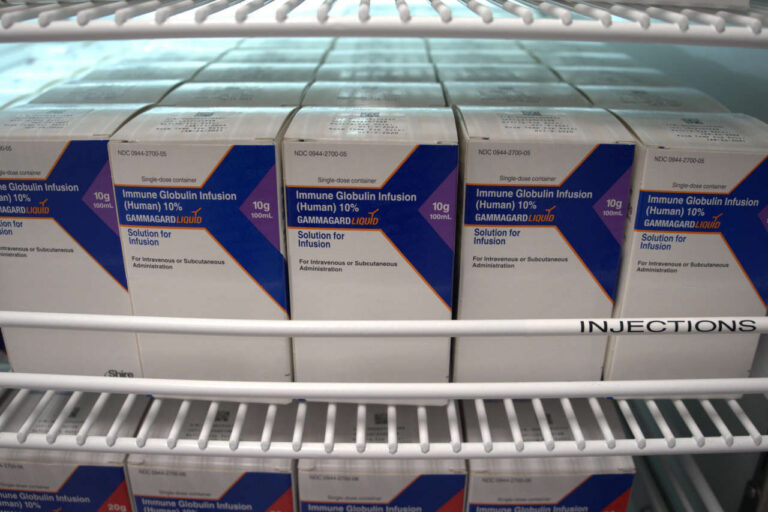
- Prescription medications: IVIG for primary immunodeficiencies, biologics for autoimmune conditions (Crohn’s disease, rheumatoid arthritis, multiple sclerosis)
- Infusion administration and certified nursing services
- Medical supplies and equipment (IV poles, tubing, infusion pumps)
Out-of-pocket costs vary by plan. You may be responsible for copays, coinsurance, or deductibles depending on your policy structure. One important consideration: Where you receive treatment can significantly impact costs. Studies show hospital outpatient departments charge 42% more than independent infusion centers, with no significant improvement in safety, quality, or patient outcomes [3].
For insurance to cover your treatment, your doctor must prescribe infusion therapy with a specific diagnosis code that demonstrates medical necessity. This documentation proves you have a chronic or immunological condition that requires this level of care (insurance companies do not cover elective wellness IV therapies).
Does Medicare Cover Infusion Therapy?
Medicare provides comprehensive coverage for medically necessary infusion therapy through both Part B and Part D. Understanding which part of Medicare covers your specific treatment helps you anticipate out-of-pocket costs.
Medicare Part B (Medical Insurance) covers outpatient infusion services at certified infusion centers and hospital outpatient departments. In 2026, beneficiaries pay 20% coinsurance after meeting the $257 annual deductible [1]. Part B covers:
- IVIG therapy for FDA-approved conditions (primary immunodeficiency, CIDP, ITP) [2]
- Biologic medications for documented autoimmune and chronic conditions
- Infusion administration, nursing services, and medical supplies
Medicare Part D (Prescription Drug Plans) may cover certain home infusion drugs not included under Part B. Part D has a $2,100 out-of-pocket cap in 2026 [1].
Whether Medicare approves your coverage depends on several factors: your doctor must submit the correct diagnosis code, prove medical necessity based on your health history, and show that the prescribed medication has FDA-approved indications for your specific diagnosis.
Understanding Insurance Approvals (Prior Authorization)
Prior authorization is the process where your doctor submits documentation to your insurance company to prove that infusion therapy is medically necessary for your specific condition. Insurance companies generally require:
- Clear diagnosis explaining why IV therapy is necessary
- Comprehensive medical history showing treatment necessity
- Documentation aligned with insurance guidelines for medical necessity
The approval process often faces common challenges that can delay or derail coverage:
- Incomplete documentation: Doctor’s offices sometimes miss key details or fail to include comprehensive patient history
- Weak cases: If insufficient evidence is submitted initially, claims get denied, and denials become exponentially harder to overturn
- Timeline delays: Back-and-forth communication between doctor’s office and insurer can stall treatment for weeks
Research shows that 91% of healthcare providers report prior authorizations have highly negative or somewhat negative effects on patient care [4]. The best way to avoid delays is pre-screening chart notes and supporting documentation before submission to ensure nothing important is missing.
How AmeriPharma Handles Insurance Verification for You
Most infusion centers take a reactive approach: They verify your basic eligibility, then leave the complex authorization process to you and your doctor’s office. This means you’re often caught in the middle, fielding calls from both parties while trying to understand confusing medical terminology and insurance jargon.
AmeriPharma takes a fundamentally different approach. In-house insurance specialists handle every aspect of the insurance process from start to finish.
What AmeriPharma’s team does for you:
- Manages all communication with your insurance company
- Handles paperwork and secures insurance approvals
- Pre-screens your chart notes and supporting documentation to identify gaps before submission
- Works directly with your prescriber to strengthen weak cases and prevent denials
- Applies daily expertise in what insurers need to deem treatment medically necessary
AmeriPharma gets insurance approvals when other pharmacies fail. Because our team handles insurance approvals every single day, we understand exactly what insurance companies need to deem treatment medically necessary, which medical terminology to use, and how to present your case in the strongest possible light.
Beyond insurance approvals, AmeriPharma provides additional financial support that can reduce or eliminate your out-of-pocket costs. The organization has secured over $55 million in financial assistance for patients to date. Dedicated copay assistance specialists help identify funding programs you may qualify for, and some patients end up paying nothing out of pocket. Most patients are placed on therapy within 2 weeks of their first contact with AmeriPharma.
Get Started with Free Insurance Verification
Insurance does cover medically necessary infusion therapy when properly prescribed and documented for chronic or immunological conditions. In the end, the real challenge isn’t whether coverage exists; it’s navigating the complex approval process.
AmeriPharma’s proactive insurance team removes that burden entirely. While you focus on your health, our specialists work behind the scenes to secure approvals, coordinate with your doctor, and identify financial assistance programs. Verify your insurance coverage today to learn how AmeriPharma can help you get the treatment you need without the administrative headaches.
REFERENCES:
- Centers for Medicare & Medicaid Services. (2026). Medicare & You Handbook 2026. Retrieved from https://www.medicare.gov/publications/10050-medicare-and-you.pdf
- U.S. Food and Drug Administration. (2024). Immune Globulins – Approved Blood Products. Retrieved from https://www.fda.gov/vaccines-blood-biologics/approved-blood-products/immune-globulins
- Cruchelow, K.R., Layne, S., DeClercq, J., Choi, L., & Zuckerman, A.D. (2026). Comparing rates of primary medication nonadherence and turnaround time among patients at a health system specialty pharmacy compared with external specialty pharmacies. Journal of Managed Care & Specialty Pharmacy, 32(3), 300-311. Retrieved from https://www.jmcp.org/doi/10.18553/jmcp.2026.32.3.300
- National Infusion Center Association & SamaCare. (2023). Prior authorization challenges and opportunities for infusion centers. Retrieved from https://infusioncenter.org/unifying-prior-authorization-data-unique-challenges-and-opportunities-for-infusion-centers/











 English
  Spanish
  Chinese
  Vietnamese