
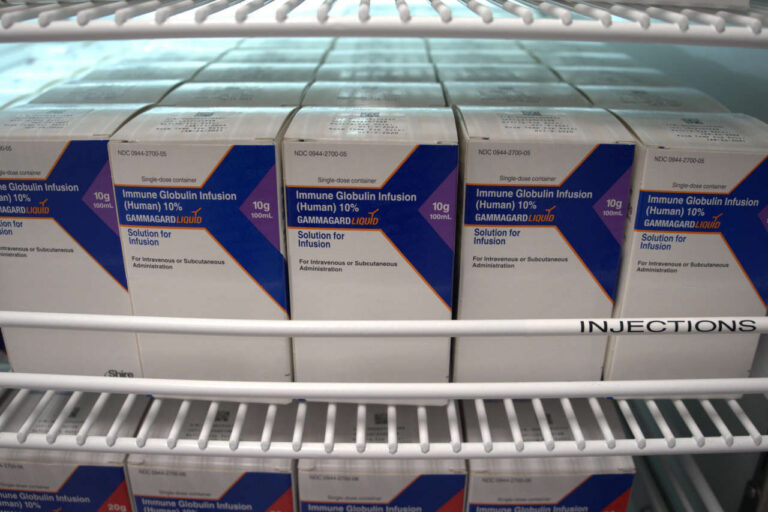
If your doctor prescribed Gammagard infusions, you probably want to know what you’ll pay. Gammagard pricing can be confusing. Insurance, dosage, where you get treatment, and help programs all affect your final bill. This guide explains what drives Gammagard infusion costs. It also shows what money help is available and how to get the right cost for your situation.
What you’ll learn:
- Gammagard costs $100 to $350+ per gram on average. What you pay depends on insurance, your dose, and where you go for treatment.
- Help programs can reduce your costs to $0. This includes maker support up to $20,000 each year.
- Infusion centers usually cost less than hospitals. They also give better help with insurance.
- Five things decide your final bill: insurance type, where you get treatment, your dose, how often you go, and what help programs you can use.
- Getting insurance checked before treatment helps avoid surprise bills.
Gammagard Cost Breakdown by Treatment Setting
| Cost Part | Hospital | Infusion Center | Home Infusion | Notes |
| Cost Per Gram | $250-$400+ | $150-$300 | $150-$275 | Changes by area |
| Facility Fee | $500-$2,000+ | $200-$500 | $0 | Hospitals charge more |
| Nursing Fee | $300-$800 | $150-$400 | $100-$300 | For nurse and supplies |
| Total (60g dose) | $18,000-$27,000+ | $11,000-$20,000 | $10,000-$18,000 | Before insurance |
| With Insurance | $1,500-$5,000 | $500-$2,100 | $500-$2,100 | What you pay |
| Other Costs | Parking, long waits | Free parking | Most convenient | Hidden factors |
These are estimates for a typical 60-gram dose. Your actual costs will be different based on your dose, insurance plan, and location. For detailed pricing breakdowns and research data, see our comprehensive Gammagard Cost Analysis.
Understanding Gammagard Base Pricing and Dosage
Gammagard Liquid is an immune treatment. Doctors use it for immune problems and nerve conditions [1]. Understanding how dosing works helps you guess your costs.
The base cost is $100 to $350+ per gram [2]. This depends on the supplier and amount. Your dose is based on your weight. Most people need 0.5 to 2.4 grams for each kilogram they weigh [3]. How often you need treatment varies. Some people need infusions every three to four weeks. Others go monthly.
Here’s how it works:
- A 150-pound person (68 kg) at 1 gram per kg needs 68 grams per infusion
- At $200 per gram average, that’s $13,600 per infusion before insurance
- At 12 infusions per year, the yearly cost is $163,200 before insurance
| Your Weight | Typical Dose (1 g/kg) | Cost at $200/gram | Yearly Cost (12 times) |
| 100 lbs (45 kg) | 45 grams | $9,000 | $108,000 |
| 150 lbs (68 kg) | 68 grams | $13,600 | $163,200 |
| 200 lbs (91 kg) | 91 grams | $18,200 | $218,400 |
| 250 lbs (113 kg) | 113 grams | $22,600 | $271,200 |
These are estimates using average costs. Your doctor decides your actual dose based on your condition and blood test results.
These numbers may look scary. But most people pay far less thanks to insurance and help programs.
5 Big Things That Affect Your Gammagard Infusion Cost
Understanding what drives your costs helps you plan and find savings. These five things have the biggest impact.
1. Insurance Type and How It Covers Treatment
Your insurance plan decides most of what you pay:
- Regular insurance usually covers 60% to 90% after you meet your deductible
- Medicare Part B covers about 80%, leaving you with 20% [4]
- Medicaid coverage varies by state, but it often covers most costs
- High-deductible plans mean higher costs at first until you reach your deductible
- Medical benefit vs. pharmacy benefit can change which deductible applies
2. Where You Get Treatment
Where you go makes a big difference:
- Hospitals charge the highest fees
- Infusion centers cost 20% to 40% less on average [5]
- Home infusion costs the least but requires stable patients
- In-network vs. out-of-network providers can change costs a lot
3. Your Prescribed Dose and Body Weight
Your dose directly affects costs:
- Higher weight requires more grams per infusion
- Some conditions need higher doses
- Loading doses vs. regular doses
- Changes based on blood test results
4. Where You Live
Prices vary by region:
- Cities usually have higher costs than rural areas
- Prices change from state to state
- Insurance pays different amounts in different areas
5. Your Yearly Deductible Status
Timing matters:
- Early-year costs are higher before meeting your deductible
- Once you meet your deductible, you only pay your share or copay
- Annual maximums put a cap on yearly costs
- HSA or FSA money can help with early costs
| Factor | Lower Cost | Higher Cost | Savings |
| Where You Go | Infusion center | Hospital | $3,000-$8,000 per treatment |
| Insurance | Low deductible | $5,000 deductible | $5,000+ per year |
| Provider Network | In-network | Out-of-network | 30-50% less |
| Dose | Exact dose | Rounded up | $1,000-$3,000 per treatment |
Working With Insurance Coverage for Gammagard
When you first get prescribed Gammagard, insurance is often the biggest source of stress. Here’s what you need to know. And how good providers help with this process.
Understanding Your Coverage
Most insurance plans, Medicare Part B, and Medicaid cover Gammagard infusions when medically needed [6]. But you usually need insurance approvals first. Medical staff may call this “prior authorization.”
Coverage usually falls under your medical benefit instead of your pharmacy benefit. This means your medical deductible applies.
The Insurance Approval Process
Your insurer needs specific information before approving coverage:
- Diagnosis codes showing medical need
- Notes from your doctor
- Past treatment history
- Lab results showing your levels
This process can take three to ten business days [7]. Infusion centers have teams of insurance experts who handle this every day. They understand what details insurers look for. They know how to show that treatment is medically needed. They secure approvals.
Sometimes doctor offices forget to mention key details when submitting a claim. Or they don’t include enough patient history. Claims get denied. Expert teams look at chart notes and other supporting information first. They check if more details are needed. This gives the case the best chance of approval. If a case is weak and you submit it, getting approval becomes much harder. This is true even after the doctor provides more information.
Figuring Out Your Costs
Once approved, your costs depend on where you are in your benefit year:
- Deductible: What you pay before insurance starts
- Your share: The percent you pay after your deductible (usually 10% to 20%)
- Copay: Flat fee per infusion (less common for Gammagard)
- Annual maximum: Your yearly cost limit
| Your Situation | What Happens | Your Typical Cost | Next Steps |
| Deductible NOT met | You pay the full rate until met | $5,000-$15,000 | Get help ASAP |
| Deductible met, regular insurance | Insurance pays 80-90%, you pay 10-20% | $1,000-$3,000 per infusion | Check help eligibility |
| Medicare Part B | Medicare pays 80%, you pay 20% | $2,000-$4,000 per infusion | Look for extra help |
| Medicaid | Often covers 100% | $0-$50 per infusion | Confirm approval done |
Key Questions to Ask Your Insurance
Before your first infusion, ask:
| Question | Why It Matters |
| “Is Gammagard covered under medical or pharmacy benefit?” | Decides which deductible applies |
| “Do I need insurance approvals?” | Affects timeline (3-10 days) |
| “What will I pay per infusion after my deductible?” | Helps you plan |
| “Which infusion centers are in my network?” | Choosing in-network saves 30-50% |
| “Does my plan use a copay accumulator program?” | Affects if maker help counts toward your deductible |
Hospital vs. Infusion Center: Why Location Affects Cost
Where you get Gammagard infusions affects both cost and experience. Here’s what the data shows.
Why Hospitals Cost More
Hospital outpatient departments charge higher prices for several reasons:
- Higher building costs
- Hospital fees add big charges
- Less specialized in high-volume infusion
- Often longer wait times and delays
- Extra costs: parking fees, hard to navigate
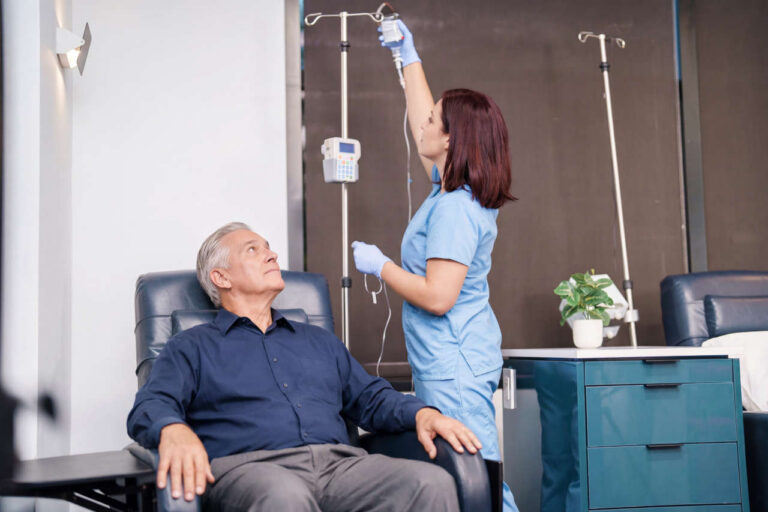
Infusion Center Benefits
Infusion centers usually cost 20% to 40% less than hospital treatment for the same infusion [11]:
- Focus on infusion therapy (more efficient)
- Easier insurance checking and billing
- IgCN-certified and CRNI-certified nursing staff
- More flexible scheduling
- Easy locations with free parking
- Comfortable amenities
| Cost Part | Hospital | Infusion Center | Difference |
| Gammagard (60g) | $15,000 | $12,000 | $3,000 savings |
| Facility fee | $1,500 | $300 | $1,200 savings |
| Nursing | $600 | $350 | $250 savings |
| Supplies | $400 | $250 | $150 savings |
| Total billed | $17,500 | $12,900 | $4,600 savings |
| Your cost (20% share) | $3,500 | $2,580 | $920 savings per infusion |
| Yearly savings (12 times) | — | — | $11,040 |
Quality and Safety Things to Consider
When picking providers, consider:
- Accreditation: Look for URAC, ACHC, and NABP accreditation (AmeriPharma Infusion Centers holds all three)
- Specialized nurses: IgCN-certified nurses have special training in immune treatment
- Infection control: You face higher risk of catching other illnesses in hospitals compared to infusion centers
- Patient satisfaction: Check reviews and feedback
How to Get the Right Cost Estimate for Your Gammagard Treatment
Getting a clear answer about what you’ll pay can feel impossible. Here’s exactly what to do. Working with an experienced infusion center makes this much easier.
Step 1: Gather Your Information
Before calling anyone, have ready:
- Your insurance card (front and back photos)
- Your prescription from your doctor (with diagnosis code)
- Your current blood levels (if known)
- List of current medicines
- Your weight (for dose calculation)
Step 2: Contact Your Insurance Provider
Call the number on your card. Ask the key questions listed earlier. Ask for a written estimate if possible. Write down who you spoke with and when.
Step 3: Contact Infusion Centers for Checking
Call two to three in-network infusion centers. Ask them to run a benefits check. Ask for an estimate based on your situation. Ask about their money help support.
What Good Benefit Checking Includes
A good infusion center has a team who handle all contact with your insurer. They manage the paperwork. They secure your insurance approvals for you. This includes:
- Contact with your insurer before your first infusion
- Confirmation of coverage and insurance approval status
- Calculation of your expected costs
- Finding copay help programs you can use
- Clear, written cost estimate before you commit
- No surprise bills. You know the costs upfront.
Step 4: Apply for Money Help
Start with the maker copay program (Takeda). Then apply for foundation grants if needed. Allow two to three weeks for processing. Your infusion center can help with paperwork.
Step 5: Schedule Your First Infusion
Once costs are clear and help is in place, schedule your infusion. Treatments are usually scheduled within two weeks of prescription.
| Week | Action | Who Does It | Result |
| Week 1 | Prescription written, insurance check started | Doctor, Infusion center | Insurance approval sent |
| Week 1-2 | Benefits check, cost calculation | Infusion center billing team | Clear cost estimate given |
| Week 2 | Apply for copay help | You (with center help) | Application sent |
| Week 2-3 | Copay help approval | Program foundation | Help approved |
| Week 3 | First infusion scheduled | You and infusion center | Treatment starts with known costs |
Common Cost Surprises and How to Avoid Them
- Copay accumulator programs: Ask your insurance upfront if they use these
- Extra bills from out-of-network providers: Always check in-network status
- Separate bills for medicine vs. nursing: Ask if billing is combined
- Changes in insurance mid-year: Keep your provider updated
- Working with one provider: Choose an infusion center that combines billing to avoid surprise charges
Common Questions
Does insurance cover Gammagard infusions?
Yes. Most regular insurance plans, Medicare Part B, and Medicaid cover Gammagard infusions when medically needed [12]. This includes primary immunodeficiency, CIDP, or MMN. But you usually need insurance approvals first. What you pay varies based on your plan’s deductible and share. Working with an infusion center that handles insurance checking upfront makes sure you know your costs before treatment.
Can I get Gammagard infusions for free or at very low cost?
Yes. If you have regular insurance, Takeda’s Co-Pay Help Program can cover up to 100% of your costs (up to $20,000 per year) [8]. Infusion centers like AmeriPharma help patients find and apply for all available help programs.
Is Gammagard cheaper at a hospital or an infusion center?
Infusion centers usually cost 20% to 40% less than hospital treatment for the same Gammagard infusion [5]. Hospitals charge higher facility fees and overhead costs. Infusion centers specialize in efficient, high-volume infusion. For example, a 60-gram Gammagard infusion might cost $17,500 at a hospital but $12,900 at an infusion center. This saves you and your insurance about $4,600 per treatment.
Conclusion
Gammagard infusion costs vary widely. This depends on your insurance coverage, where you get treatment, your dose, and available money help. The base price may seem scary. But most people pay far less or nothing thanks to copay help programs and foundation grants.
The key to managing Gammagard costs is working with an experienced provider. They handle insurance checking upfront. They connect you to money help. They offer clear pricing before your first infusion. Infusion centers like AmeriPharma Infusion Centers usually cost less than hospitals. They also give a more personal experience. You get expert support navigating the complex world of insurance and money aid.
Contact AmeriPharma Infusion Centers for a Free Insurance Check and Cost Estimate.
AmeriPharma Infusion Centers offer infusion therapy with IgCN-certified nurses. We provide full insurance coordination and copay help support. We help you navigate the complex medical and financial systems. You can focus on your health.
REFERENCES:
- Gammagard Liquid Official Prescribing Information – Takeda Pharmaceuticals. https://www.gammagard.com/
- AmeriPharma Specialty Care: Cost of IVIG Treatment. https://ameripharmaspecialty.com/ivig/cost-of-ivig-treatment/
- Medical News Today: Gammagard Liquid Price, Dosage, Side Effects. https://www.medicalnewstoday.com/articles/drugs-gammagard-liquid
- CMS Medicare Learning Network: Intravenous Immune Globulin Items & Services (2024). https://www.cms.gov/files/document/mln3191598-intravenous-immune-globulin-items-services.pdf
- Frontiers in Neurology: Cost Effectiveness of Immunoglobulin Treatment (2021). https://www.ncbi.nlm.nih.gov/pmc/articles/PMC8019941/
- Gammagard.com: Access & Support for Healthcare Providers. https://www.gammagard.com/hcp/ivig-scig-access
- Gammagard.com: What to Expect with Infusions. https://www.gammagard.com/primary-immunodeficiency/what-to-expect
- Takeda Patient Support Co-Pay Assistance Program. https://www.takedapatientsupport.com/ | 1-866-861-1750
- Patient Access Network (PAN) Foundation. https://www.panfoundation.org/ | 866-316-7263
- HealthWell Foundation. https://www.healthwellfoundation.org/ | 800-675-8416
- QuickRx Specialty Pharmacy: Gammagard Copay Assistance. https://quickrxspecialty.pharmacy/gammagard-immune-globulin-copay-assistance/
- GoodRx: Gammagard Medicare Coverage Details. https://www.goodrx.com/gammagard/medicare-coverage











 English
  Spanish
  Chinese
  Vietnamese