Understanding IV infusion costs isn’t just about the drug price; it’s about where you receive treatment. Patients receiving infusions at hospital outpatient departments pay 2.5 to 7 times more than those treated at specialty infusion centers, even for the exact same medications.
Get Financial Assistance
If you’re researching the cost of IV infusion therapy, you’re likely facing a recent diagnosis or evaluating treatment options for a chronic condition. This guide breaks down real-world costs for common infusion medications like Remicade and Vyvgart, explains why location matters more than you think, and shows you how to reduce your out-of-pocket expenses without compromising care quality.
Primary Cost Comparison: Hospital vs. Specialty Infusion Center
The single biggest factor determining your infusion cost isn’t the drug itself; it’s where the infusion takes place. According to a 2024 study published in the New England Journal of Medicine analyzing over 4.7 million infusion visits, hospitals impose markup rates between 120% and 630% above drug acquisition costs, while independent physician practices and specialty infusion centers operate at near-cost pricing with markups around 12% [1].
IV Infusion Cost Comparison by Setting
| Setting | Drug Cost | Facility Fee | Administration | Total Per Treatment | Markup vs. Acquisition |
| Hospital-based (HOPD) | $1,500 – $3,000 | $800 – $2,500 | $200 – $500 | $2,500 – $6,000 | 276-289% |
| Hospital outpatient | $1,200 – $2,500 | $500 – $1,500 | $150 – $400 | $1,850 – $4,400 | 244% |
| Specialty infusion center | $900 – $1,500 | $0 | $100 – $250 | $1,000 – $1,750 | ~12% |
Source: NEJM Hospital Prices for Physician-Administered Drugs (2024); Third Way Hospital Pricing Report (2025) [1,2]
Why Hospital-Based Infusions Cost More
Three factors drive higher hospital costs:
- Facility Fees: Hospitals charge separate “facility fees” ranging from $800 to $2,500 per visit to cover overhead costs like building maintenance, equipment, and administrative staff. Specialty infusion centers don’t impose these fees [3].
- Market Power Through Consolidation: As hospital systems acquire competing facilities and physician practices, they gain negotiating leverage with insurers. Research from Third Way shows that patients pay 3 to 7 times more for the same infusion when their physician’s office is owned by a hospital system [2].
- 340B Program Misalignment: Approximately one-third of hospitals qualify for the federal 340B Drug Pricing Program, which provides discounts averaging 35% off wholesale drug costs. However, these hospitals aren’t required to pass savings to patients. The NEJM study found 340B-eligible hospitals retain 64.3% of insurer drug spending through markups, compared to 19.1% retained by physician practices [1].
Breaking Down Remicade Infusion Costs
Remicade (infliximab) is one of the most commonly prescribed biologic therapies for autoimmune conditions, including Crohn’s disease, ulcerative colitis, rheumatoid arthritis, and psoriatic arthritis. Understanding its cost structure helps patients anticipate expenses.
Remicade Pricing Components
Drug Acquisition Cost:
- Wholesale price: $1,401.38 per 100 mg vial (Q1 2026)
- Typical maintenance dose: 5 mg/kg body weight
- Example for 100kg patient: 500 mg = 5 vials = $7,006.90 for drug alone [4].
Medicare Reimbursement:
- J-code J1745: $30.24 to $60.91 per 10 mg unit [5].
- 500 mg dose = 50 units × $30.24 = $1,512 (Medicare rate)
Total Cost by Setting
| Cost Component | Hospital-Based | Outpatient Hospital | Specialty Infusion Center |
| Drug cost (500mg) | $7,007 | $7,007 | $7,007 |
| Facility fee | $1,000 – $3,000 | $800 – $1,500 | $0 |
| Administration fee | $350 – $700 | $300 – $700 | $250 – $600 |
| Total per infusion | $8,357 – $10,707 | $8,107 – $9,207 | $7,257 – $7,607 |
Potential Savings: Patients treated at specialty infusion centers save $1,100 to $3,100 per treatment compared to hospital-based settings.
Insurance Coverage for Remicade
Medicare Part B (20% coinsurance):
- Hospital: $1,671 – $2,141 patient responsibility
- Specialty center: $350 – $425 patient responsibility
Commercial insurance (typical copay structure):
- Hospital: $2,500 – $3,500 before copay assistance
- Specialty center: $500 – $1,000 before copay assistance
Manufacturer Copay Assistance: J&J offers a copay savings program for commercially insured Remicade patients, providing up to $20,000 per calendar year in assistance. Eligible patients may pay as little as $5 per infusion [6].
Vyvgart Infusion Cost Per Treatment
Vyvgart (efgartigimod alfa-fcab) is a biologic therapy that treats generalized myasthenia gravis (gMG) with acetylcholine receptor (AChR) antibody positivity. As a newer treatment approved in 2021, it carries a high wholesale price, but significant copay assistance is available.
Vyvgart Pricing Structure
Drug Acquisition Cost:
- Wholesale price: $7,577 per 400 mg vial [7]
- Standard treatment cycle: 4 weekly infusions (1 vial each) = $30,308
- Maintenance: Cycles repeated based on symptom return (typically every 8-12 weeks)
Total Cost Comparison
| Cost Component | Hospital-Based | Specialty Infusion Center | Annual Cost (4 cycles) |
| Drug cost (per infusion) | $7,577 | $7,577 | $30,308 |
| Facility fee | $2,000 – $3,500 | $0 | $0 – $14,000 |
| Administration | $400 – $600 | $200 – $300 | $800 – $2,400 |
| Per infusion total | $10,300 – $12,000 | $8,100 – $8,200 | — |
| Per cycle (4 weeks) | $41,200 – $48,000 | $32,400 – $32,800 | — |
| Annual total | $163,508 – $190,708 | $128,308 – $129,908 | — |
Potential Savings: $8,500 to $14,900 per treatment cycle ($34,000 to $59,600 annually) at specialty infusion centers.
Insurance and Copay Assistance
Commercial Insurance: Most commercial plans cover Vyvgart under medical benefits (not pharmacy). Patient responsibility varies widely:
- High-deductible plans: Patients pay full cost until deductible is met
- Traditional plans: 10-30% coinsurance is typical
Argenx Copay Support Program: Commercially insured patients may qualify for up to $25,000 per calendar year in copay assistance, with eligible patients paying as little as $0 per infusion [8]. The program requires:
- Commercial insurance coverage for Vyvgart
- Not eligible for government insurance (Medicare, Medicaid)
- Meeting income/residency requirements
Medicare Coverage: Medicare Part B covers Vyvgart as a physician-administered drug. Patients pay:
- 20% coinsurance after Part B deductible
- Example: $30,308 cycle × 20% = $6,062 patient responsibility per cycle
- Medicare patients do not qualify for manufacturer copay assistance
Speak to a Specialist
About Copay AssistanceWhat Drives IV Infusion Costs?
Understanding the components behind infusion pricing helps you make informed decisions about where to receive care.
Drug Acquisition Prices
Specialty biologic therapies carry high wholesale costs due to complex manufacturing and limited competition. Biologics like Remicade and Vyvgart are derived from living cells and cannot be replicated as easily as traditional chemical drugs.
Typical wholesale prices for common infusion medications:
- IVIG (intravenous immunoglobulin): $60 – $120 per gram [7]
- Remicade (infliximab): $1,168 per 100 mg vial [4]
- Vyvgart (efgartigimod): $7,577 per 400 mg vial [4]
- Ocrevus (ocrelizumab): ~$78,858 per year [9]
- Entyvio (vedolizumab): ~$84,000 per year [10]
Administration and Facility Fees
Administration fees cover the clinical services provided during your infusion:
- Pre-infusion assessment and vital signs monitoring
- IV catheter insertion and infusion setup
- Nurse monitoring during treatment (typically 1-4 hours)
- Management of potential allergic reactions
- Post-infusion observation
Facility fees (hospital-specific) cover overhead costs that specialty infusion centers avoid by operating as outpatient clinics rather than hospital departments. Freestanding centers focus exclusively on infusion services, resulting in lower overhead and no facility fee charges [3].
How to Reduce Your IV Infusion Costs
1. Choose the Right Site of Care
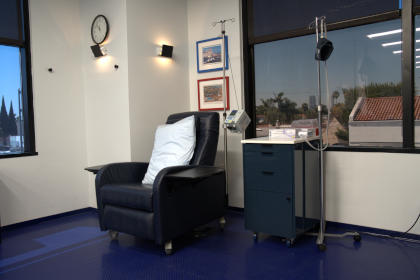
The single most effective cost-reduction strategy is receiving treatment at a specialty infusion center rather than a hospital. Potential savings range from $1,500 to $15,000 per treatment, depending on the medication [1,2,3].
How to find specialty infusion centers:
- Ask your prescribing physician for referrals
- Search “ambulatory infusion center” or “outpatient infusion clinic” in your area
- Verify your insurance covers out-of-hospital infusion sites
Questions to ask infusion centers:
- “What is your transparent pricing for [drug name]?”
- “Do you charge facility fees?”
- “Can you provide a cost estimate before treatment?”
- “Do you assist with insurance verification and approvals?”
2. Maximize Copay Assistance Programs
Most biologic drug manufacturers offer copay assistance for commercially insured patients. These programs can reduce out-of-pocket costs to $0-$5 per infusion.
Available programs:
- Remicade: Janssen CarePath ($20,000/year maximum) [6]
- Vyvgart: Argenx patient support ($25,000/year maximum) [8]
- General eligibility: Commercial insurance, not government-insured; income requirements vary
How specialty infusion centers help: Many centers employ financial navigators who proactively enroll patients in assistance programs and verify eligibility within 48 hours of initial contact.
3. Navigate Insurance Approvals
Infusion therapies typically require insurance approvals, which can delay treatment if not managed efficiently.
Insurance approval process:
- Physician submits clinical documentation to insurance
- Insurance medical reviewer evaluates medical necessity
- Approval typically takes 3-10 business days
- Denials can be appealed with additional documentation
How to expedite approvals:
- Work with providers experienced in infusion therapy who understand insurance guidelines
- Ensure complete medical records are submitted initially
- Consider specialty infusion centers with dedicated insurance specialists who handle this process day in and day out
Why expertise matters: Insurance specialists at dedicated infusion centers know exactly what details insurers look for to deem treatment medically necessary. They pre-screen chart notes and supporting documentation from your physician to identify any gaps before submission—catching missing details that could lead to denials. This proactive approach is crucial because once a case is denied, it becomes exponentially harder to get approval even after additional information is provided.
4. Understand Your Insurance Benefits
Before scheduling treatment, verify:
- Deductible status: Have you met your annual deductible?
- Coinsurance percentage: What is your responsibility after the deductible?
- Out-of-pocket maximum: When will insurance cover 100%?
- Site-of-care restrictions: Does your plan cover freestanding infusion centers?
Questions for your insurance:
- “Is [drug name] covered under medical or pharmacy benefits?”
- “What is my estimated out-of-pocket cost at [infusion center name]?”
- “Do you require insurance approvals for this treatment?”
- “Are there lower-cost site-of-care options in my network?”
5. Explore Financial Assistance Beyond Copay Programs
If you don’t qualify for manufacturer copay assistance (e.g., you have Medicare), additional resources exist:
Nonprofit patient assistance:
- Patient Advocate Foundation: Financial aid for medical costs
- HealthWell Foundation: Copay assistance for specific conditions
- PAN Foundation: Disease-specific financial support
Hospital charity care policies: If treated at a hospital, ask about charity care eligibility. Nonprofit hospitals must provide financial assistance to patients at or below certain income thresholds (typically 200-400% of the federal poverty level).
Get Copay Assistance Now
Why AmeriPharma Infusion Centers Offer Transparent, Lower-Cost Care
At AmeriPharma Infusion Centers, we believe cost should never be a barrier to receiving the treatment you need. Here’s how we help patients reduce the financial burden of infusion therapy:
Our Cost-Reduction Approach:
- No Hidden Facility Fees: We don’t charge separate facility fees. Our transparent pricing means you pay only for the drug and administration.
- 48-Hour Insurance Verification: Our team verifies your coverage, insurance approval status, and exact out-of-pocket cost within 12-72 hours — so you’ll never walk into treatment wondering what you’ll owe.
- Expert Insurance Approval Navigation: Our in-house team of insurance specialists handles all communication with your insurer and manages the complex approval process for you. They work day in and day out, navigating insurance guidelines and understanding exactly what insurers need to deem your treatment medically necessary. We pre-screen all documentation before submission and work proactively with you and your doctor to ensure every detail is correct — securing approvals even when other pharmacies fail.
- Proactive Copay Assistance: We search manufacturer programs and enroll eligible patients, resulting in average annual savings of $8,000 to $20,000.
- Financial Aid Navigation: For patients who don’t qualify for copay programs, we coordinate with nonprofit assistance foundations to help reduce or eliminate costs.
- Comfortable, Convenient Care: Private infusion suites at select locations, complimentary amenities, and straightforward parking.
Frequently Asked Questions
Will my insurance cover treatment at a specialty infusion center?
Most commercial insurance plans, Medicare, and Medicaid cover infusion therapy at freestanding centers. However, you should verify coverage before scheduling. Specialty centers typically provide insurance verification as part of onboarding.
Can I switch from hospital-based to a specialty center mid-treatment?
Yes. If you’ve started treatment at a hospital, you can transfer to a specialty infusion center for future doses. Your physician will need to update the prescription location, and the new center will coordinate records transfer.
How do I know if I qualify for copay assistance?
Eligibility requirements vary by manufacturer but generally include:
- Commercial insurance coverage (not Medicare/Medicaid)
- U.S. residency
- Valid prescription for the medication
- Income limits (some programs have no income restrictions)
Specialty infusion centers can verify your eligibility during your initial consultation.
Take Control of Your Infusion Costs
Navigating IV infusion therapy costs doesn’t have to be overwhelming. By understanding the true cost breakdown, choosing the right treatment setting, and leveraging available financial assistance, you can significantly reduce your out-of-pocket expenses while receiving high-quality care.
Next Steps:
- Get a personalized cost estimate: Contact AmeriPharma Infusion Centers to learn your exact out-of-pocket cost based on your insurance and medication.
- Verify insurance coverage: Our team will contact your insurer within 48 hours to confirm coverage and benefits.
- Explore copay assistance: We’ll proactively enroll you in manufacturer programs and nonprofit assistance foundations.
- Schedule your infusion: Experience transparent pricing, compassionate care, and comfortable amenities at a location near you.
REFERENCES:
- Robinson, James C., et al. “Hospital Prices for Physician-Administered Drugs for Patients with Private Insurance.” New England Journal of Medicine, vol. 390, no. 4, 2024, pp. 338-345.
- Wofford, Darbin. “How Hospitals are Raising Drug Prices.” Third Way, 12 Feb. 2025.
- Peterson, Jason and Beckie Fenrick. “Breaking Down Outpatient Infusion Costs: Billing, Site of Care and Savings Paths.” Navion, 20 Nov. 2025.
- © 2026 Wolters Kluwer N.V. and/or its subsidiaries.
- “Injectable Medication/Specialty Pharmacy Fee Schedule Update: May 2025.” Horizon Blue Cross Blue Shield, May 2025
- “Remicade Prices, Coupons, Copay Cards & Patient Assistance.” Drugs.com, 2025.
- “IVIG Cost Per Gram: Price Guide 2026”.” Cost Digest, January 2026.
- “Cost and coverage.” Vyvgart.com, 2025.
- “How Much is Ocrevus Without Insurance?” GoodRx, Nov 2025
- “How much does vedolizumab Entyvio cost? A Price Guide” MedXDRG, Dec 2025







 English
  Spanish
  Chinese
  Vietnamese